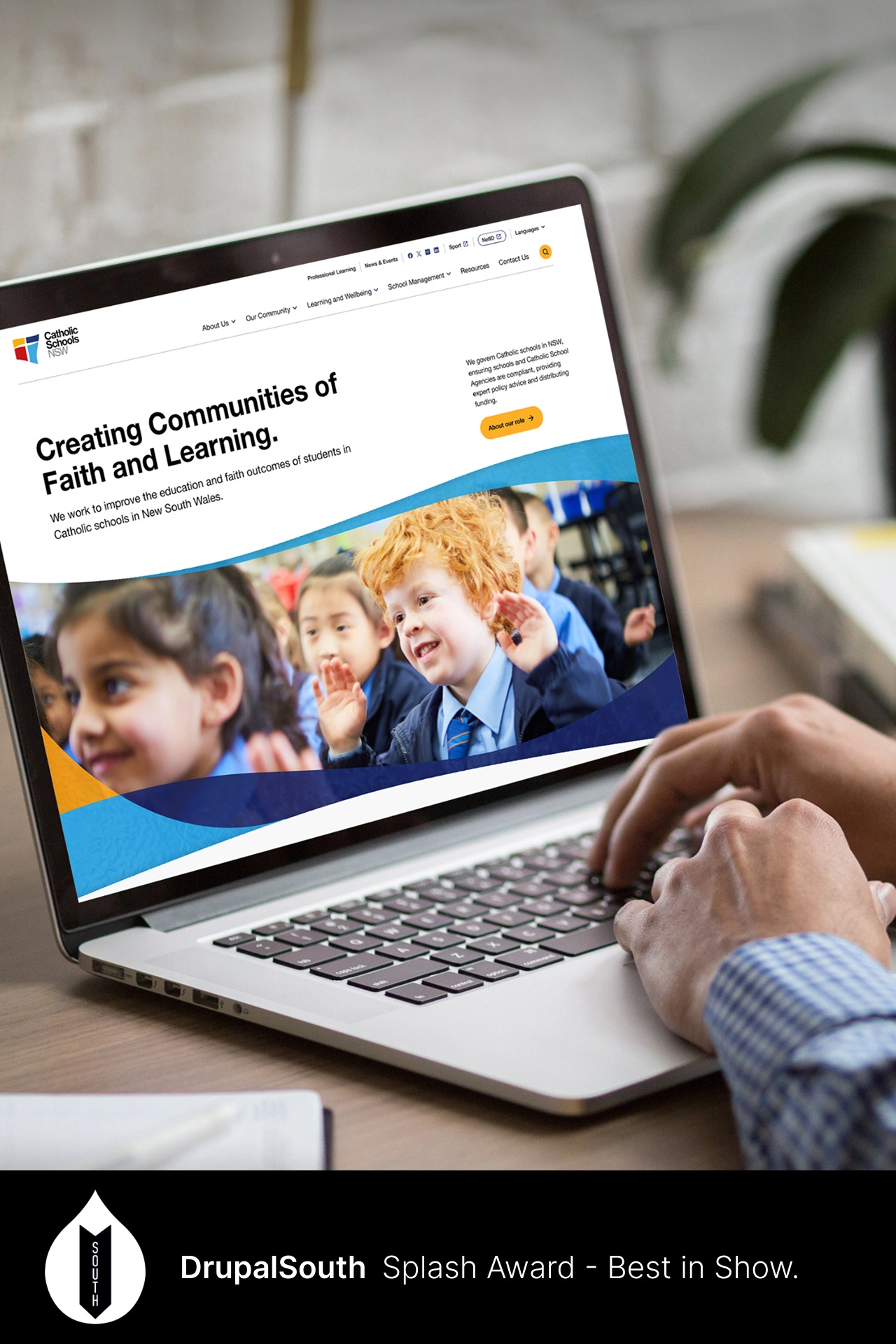


Person working on a laptop viewing the Catholic Schools NSW website homepage, with award branding for DrupalSouth Best in Show at the bottom of the image.

Catholic Schools NSW

Setting strong foundations

Impact area

Empowering people

Services

Discovery strategy

Digital transformation

Discovery research

Content strategy

User experience design

User interface design

CMS platform assessment

Drupal CMS build

Catholic Schools NSW (CSNSW) represents Catholic education throughout NSW. Through their role in funding distribution, advocacy, research, and services such as teacher training and school sports, CSNSW helps schools and students thrive academically and spiritually.

Since being established in 2017, CSNSW has grown significantly to provide more efficient and transparent administration of Catholic schools. This expansion of roles and responsibilities meant the organisation took on a range of legacy systems, processes and platforms that were fragmented and difficult to maintain. The result was a service model that frustrated users and was difficult for staff to simply and easily use to complete their jobs.

Folk partnered with CSNSW to consolidate and uplift their digital service ecosystem to improve customer experience, operations, cyber-security and technology platforms, and deliver a digital experience aligned with the organisation's vision for the future.

Visit the website

Three young school children in blue uniforms sitting on outdoor steps with backpacks, smiling and talking together.
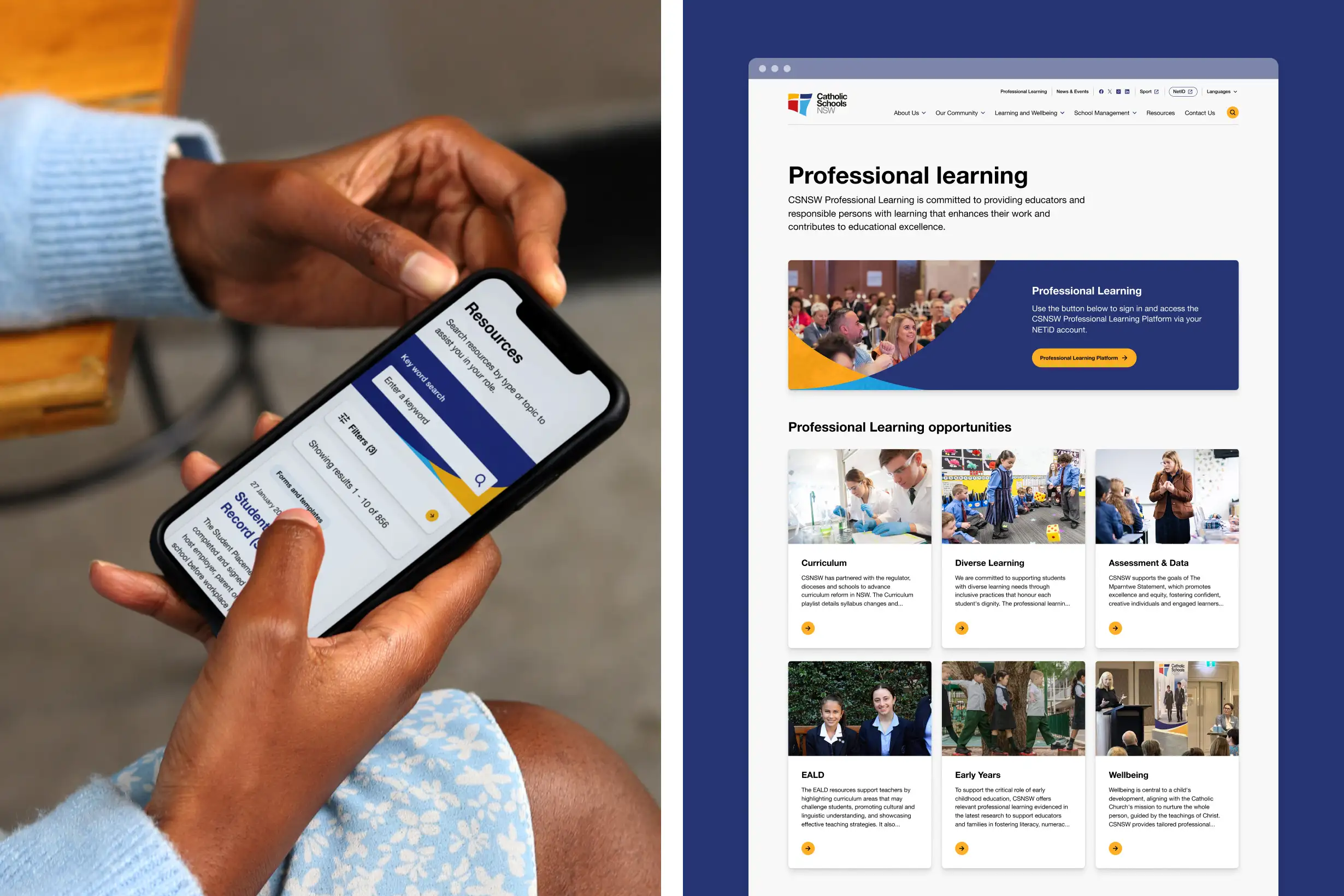
Person browsing Catholic Schools NSW resources on a mobile phone beside a professional learning website shown on a laptop-style screen.
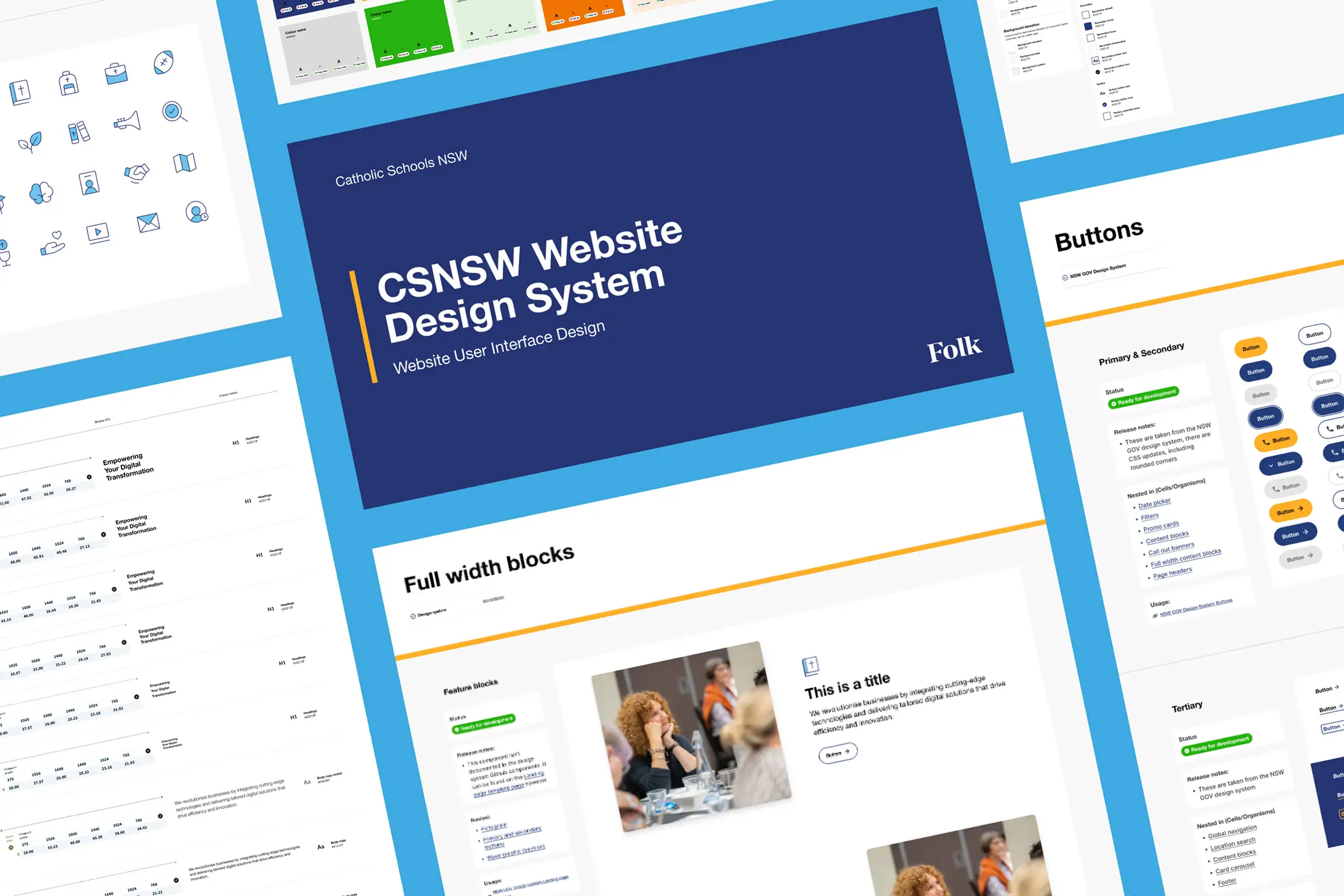
A collage of UI design system screens for Catholic Schools NSW, featuring interface elements such as icons, colour palettes, typography samples, button styles, layout blocks, and a large central panel titled CSNSW Website Design System.
Close-up of a student in a blue sports uniform kneeling on grass while tying bright blue soccer boots.

Defining a Digital Transformation

We took a big step back to review the holistic digital service ecosystem and engage staff and stakeholders to understand what was causing the most significant pain points.

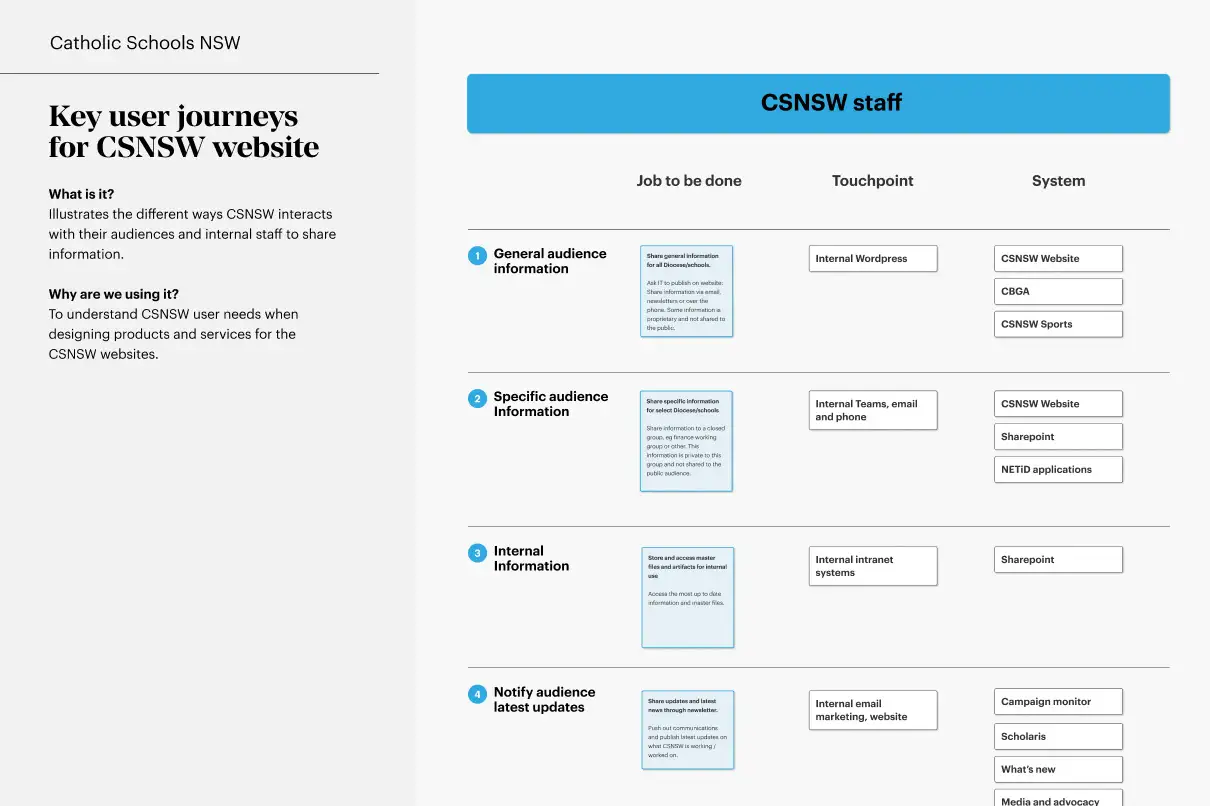
We visualised the current state using service maps to highlight user interactions and touchpoints, as well as back-of-house systems and technologies that supported service delivery. Overlaying user and staff feedback and insights, we were able to identify the greatest opportunities for system uplift, and prioritise areas of focus to deliver the greatest value to users and staff as early as possible.

We identified core attributes required to deliver the future state, and used these to align project teams and stakeholders on the key goals of digital transformation.
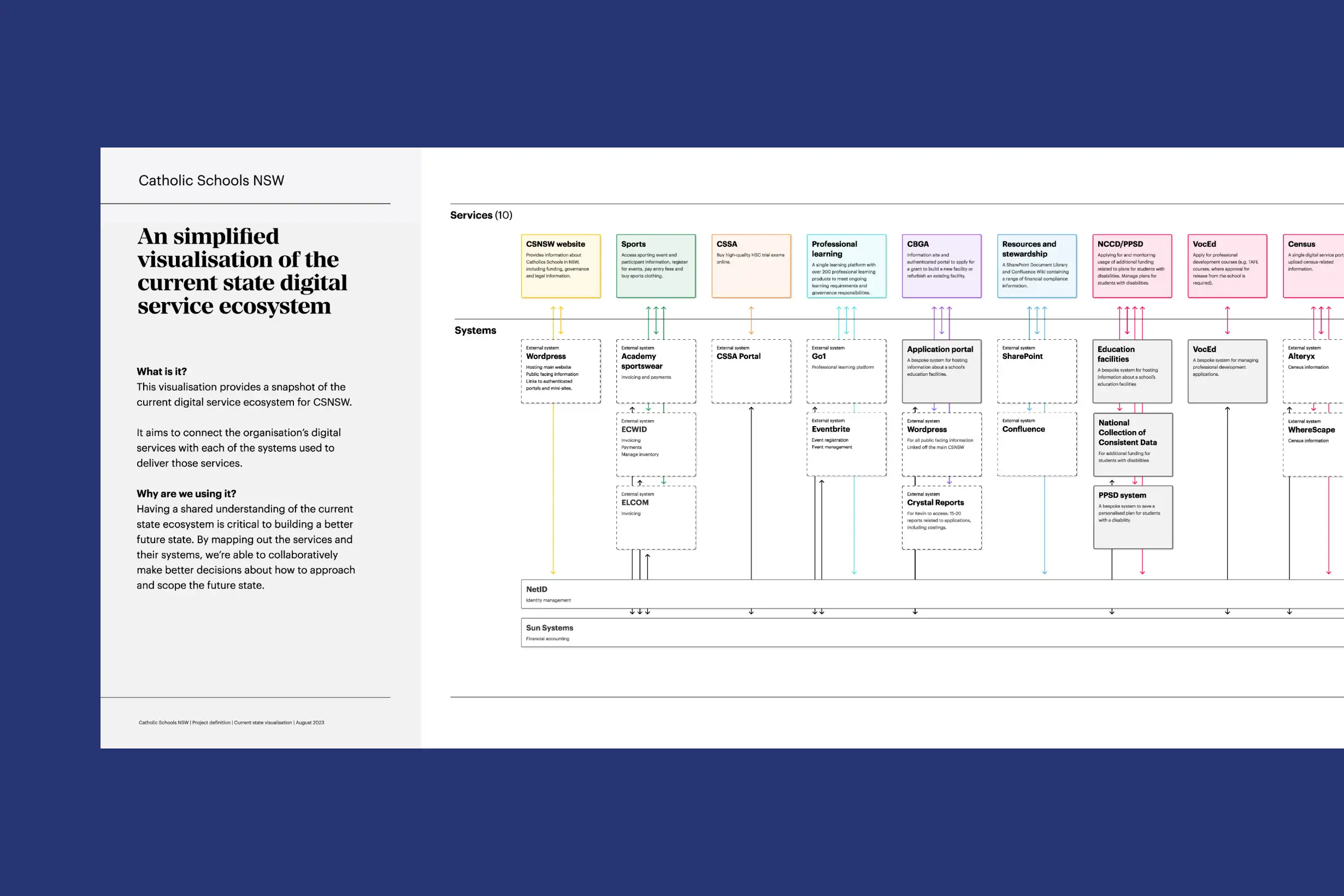
Simplified diagram showing the current digital service ecosystem for Catholic Schools NSW, mapping key services to the systems that support them.
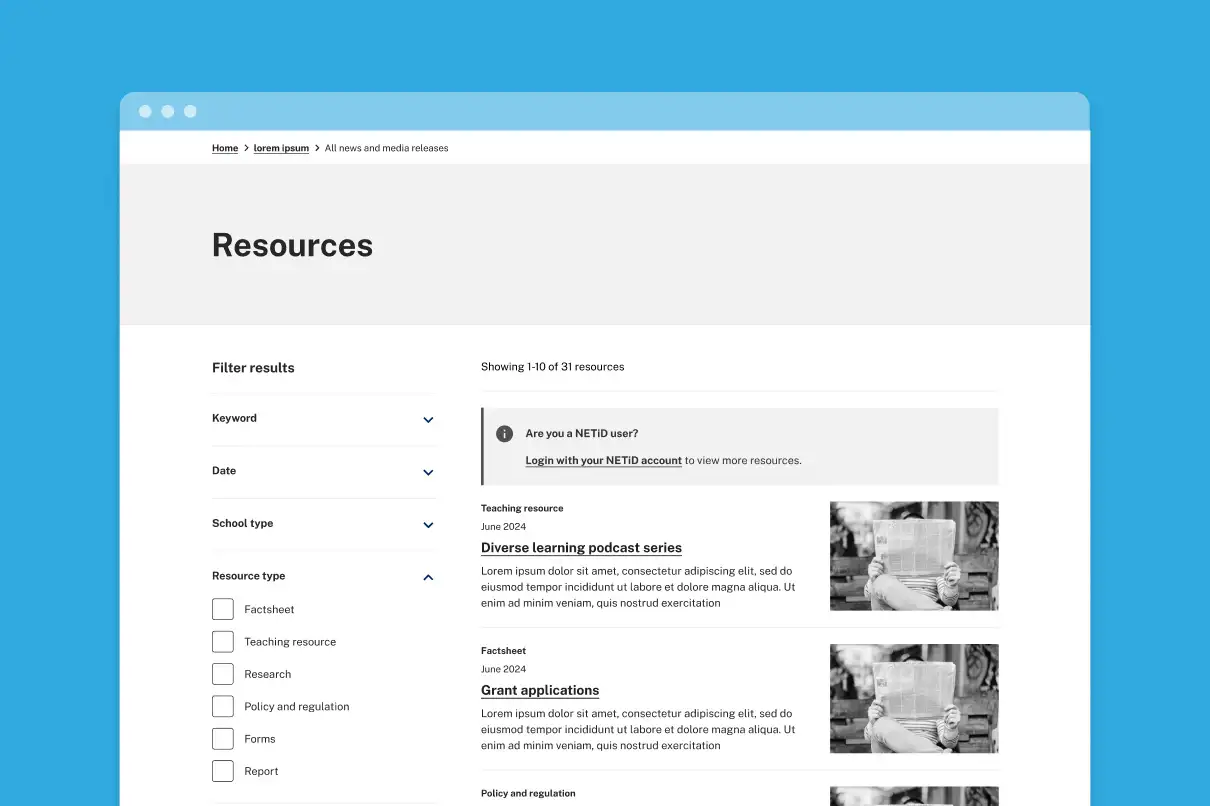
User journey map for Catholic Schools NSW illustrating key staff tasks, touchpoints, and connected systems for sharing information across audiences.A wireframe of the resources listing page for Catholic Schools NSW displaying filters, teaching resources, factsheets, and login prompt for accessing additional materials.

Horizon 1: a new front door

To deliver the digital transformation, we began the first horizon of work to create a contemporary digital front door to CSNSW with clear pathways for different audience groups, improving communication, engagement and secure access to systems.

This phase of work looked to develop the strong design, content and technology foundations for a broader digital services transformation.

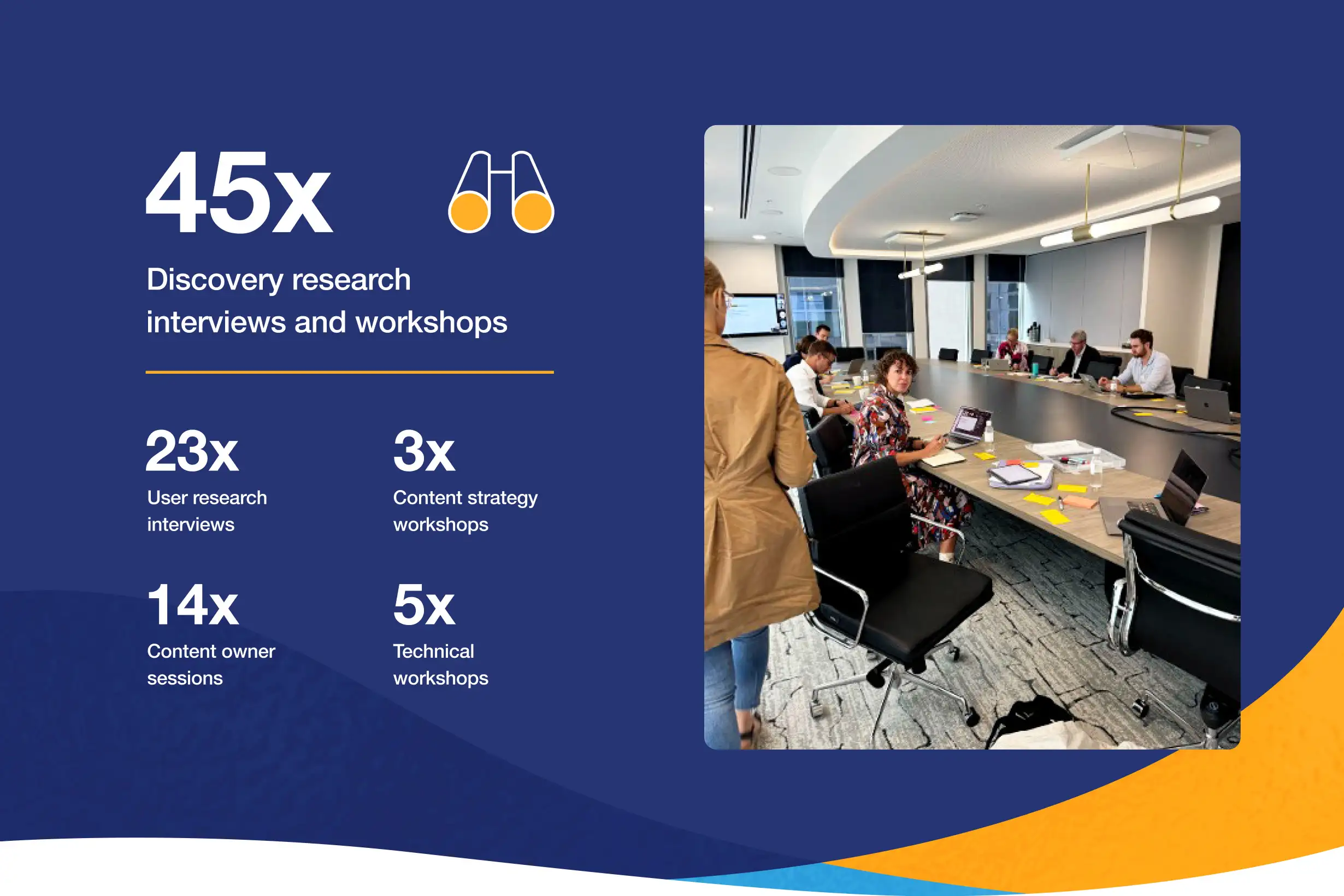
Using human-centred design methodologies, we completed thorough discovery and definition phases to deeply understand user needs and design a new website experience. Across our research, we engaged:

  • Teachers
  • Principals
  • Catholic school parents
  • Diocesan representatives

CSNSW has a specific role within the broader Catholic education community, and so it was important to not conflate or confuse their role, with the role of other key members of the system (Diocese and schools). The new website experience ensures users can easily identify the roles and responsibilities of CSNSW, quickly find content related to their role, or be connected with other parts of the system that will better meet their needs.

Slide summarising 45 discovery research activities, listing user interviews, content and technical workshops, alongside a photo of a team collaborating in a meeting room.

A connected content experience

We developed a comprehensive content strategy and model to transform CSNSW's fragmented digital content into a coordinated and helpful user experience. Starting with audits of three websites, we identified opportunities for consolidation and improvement. We worked with internal stakeholders to understand their content publishing and strategy needs, conducting detailed content audits to guide the redevelopment of the site's network and structure.

Using insights from the discovery phase, we designed:

  • a content model that connects audiences to tasks, services, and each other
  • an improved information architecture to reduce duplication and provide users with transparent, easy-to-navigate pathways.

We also developed content principles and a distinct tone of voice to reflect CSNSW's values and vision. This strategy helps the organisation maintain consistent, accurate content while streamlining operations and supporting sustainable content management practices.

Hands using a laptop to manage content in a layout builder interface, shown alongside a screen preview of configuring and editing latest news modules.

A secure and modern CMS

Choosing the right content management system (CMS) was key to CSNSW's transformation. After a thorough assessment, Drupal was selected for its scalability, security, and ability to integrate seamlessly with third-party tools. As an open-source platform, Drupal met accessibility standards and removed licensing fees, giving CSNSW greater flexibility and control over its digital ecosystem.

Working closely with our Drupal delivery partners, PreviousNext, we ensured the CMS was structured to meet the needs of CSNSW as an organisation, reflecting the content governance structures and workflows we established on the project.

The new CMS enables staff to easily create customised pages and manage content on the website. Integrations with tools like Eventbrite have reduced manual data entry, saving time and minimising errors. A unified Auth0 login system provides users with secure, single-account access to all tools and content through a single account.

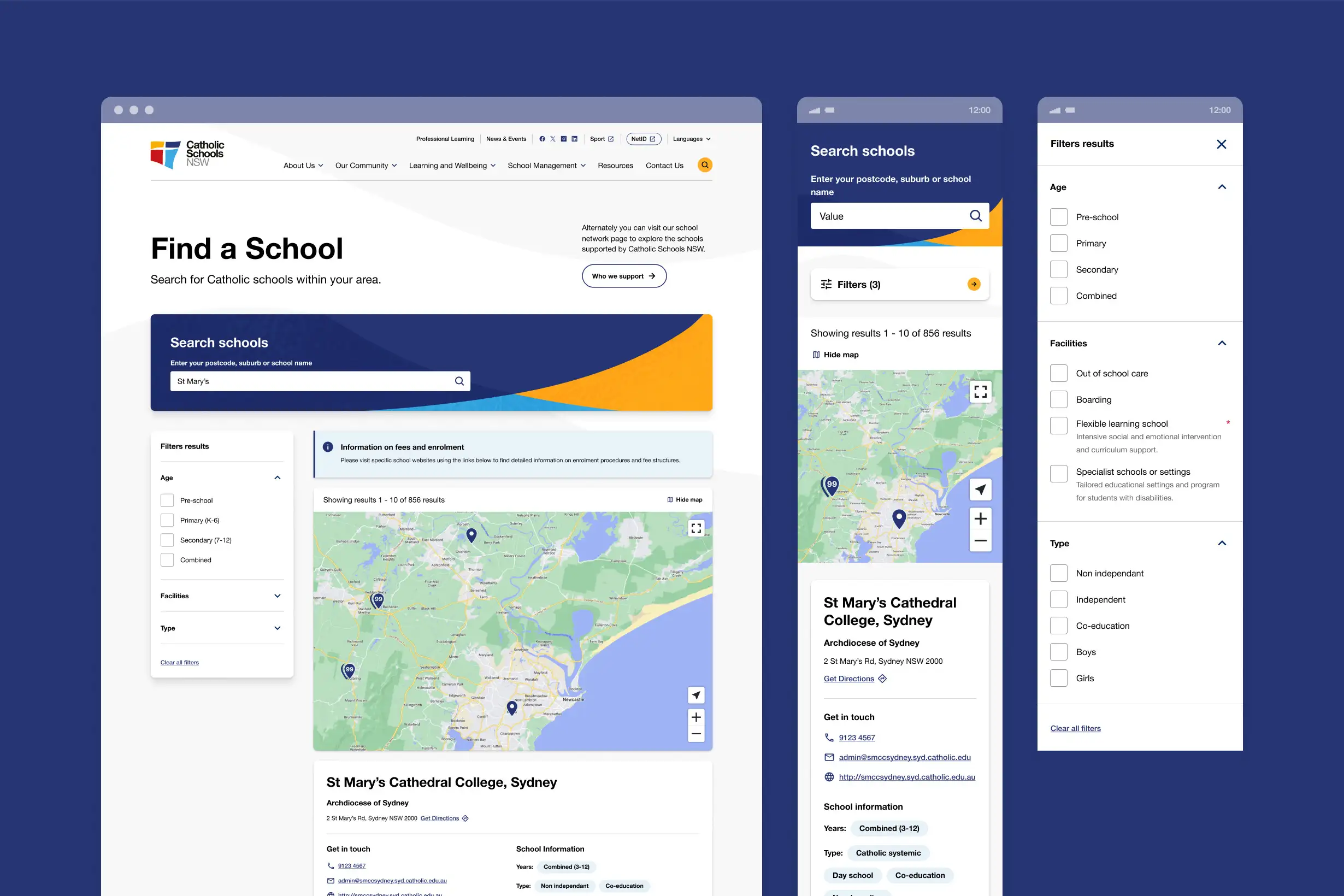
Screens showing the Catholic Schools NSW ‘Find a School’ search tool across desktop and mobile, including filters, map results, and school details.
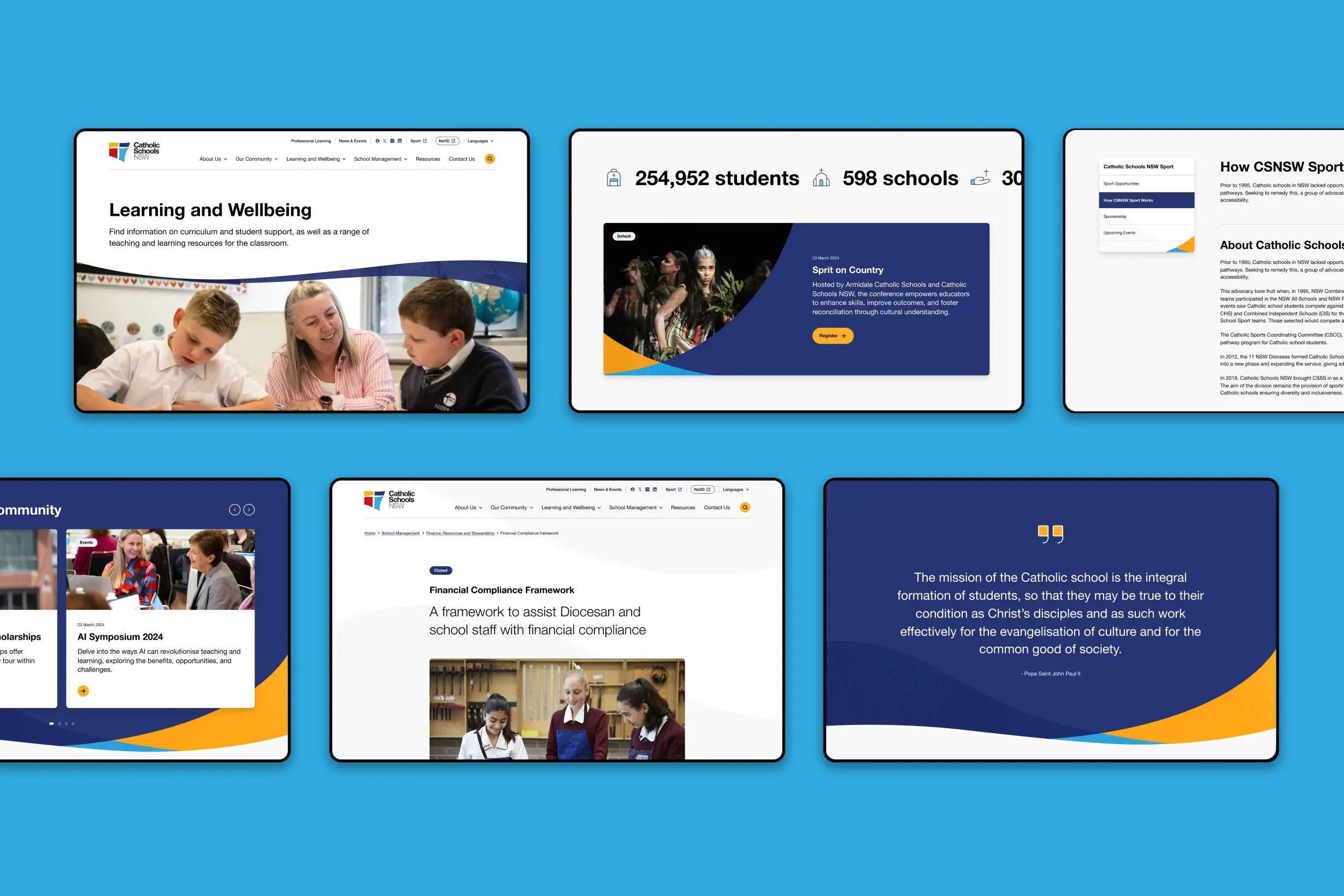
Collage of six Catholic Schools NSW website screens shown on a bright blue background, featuring pages for learning and wellbeing, conference promotion, sports information, community news, financial compliance, and an inspirational mission quote.

Modernising the Brand and Digital Design

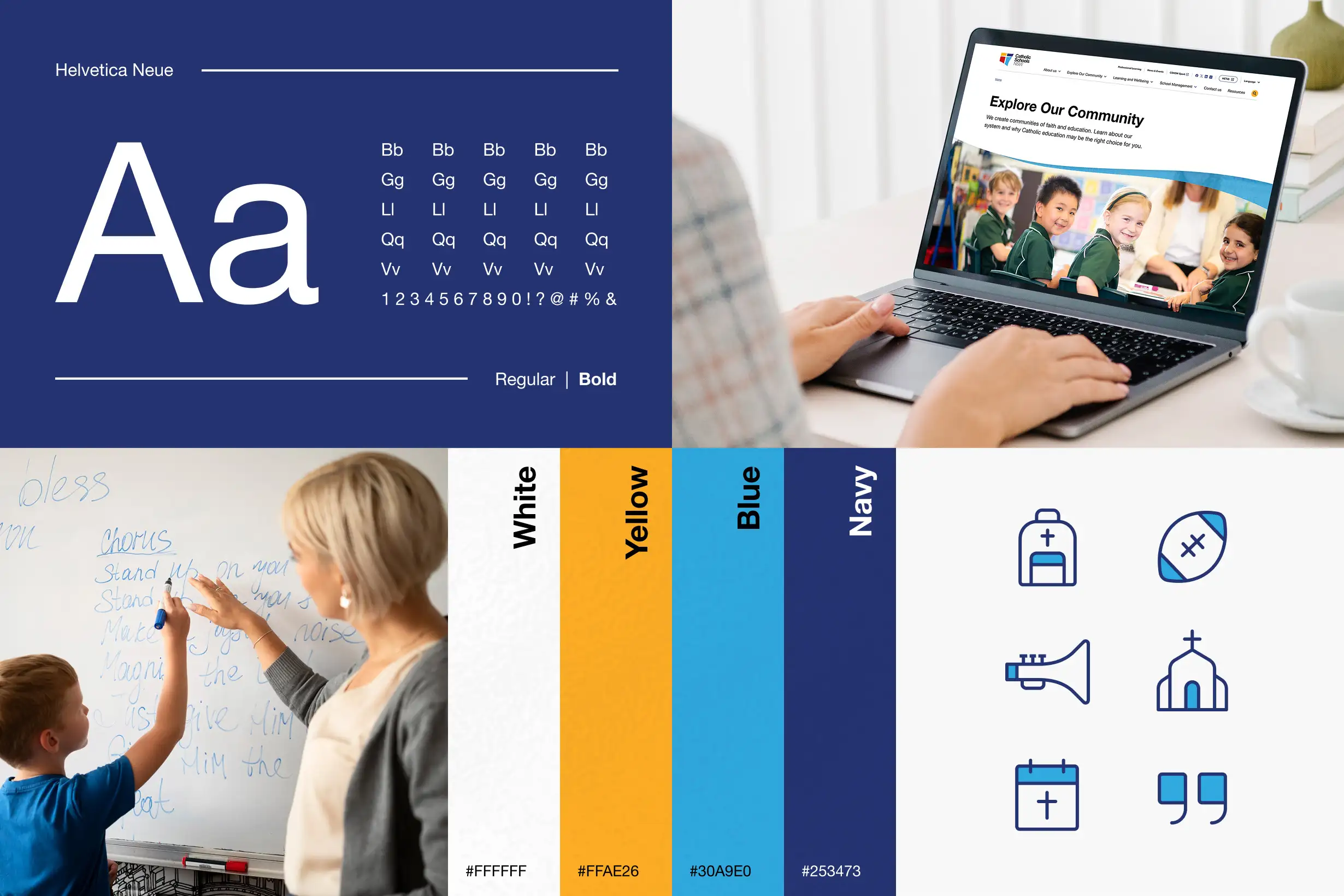
To ensure CSNSW's digital presence reflects its values and vision, refreshed the brand identity of the website. Through consultations with stakeholders, we uncovered how CSNSW wanted to be perceived: professional, engaged, community-minded, and proudly Catholic.

This insight informed the creation of a revitalised brand identity and a comprehensive user interface design system. The design system delivers a cohesive user experience across all CSNSW properties while ensuring familiarity and alignment with the organisation’s heritage. It also supports scalable digital projects, enabling CSNSW to efficiently launch new websites, products, and communication materials.

By modernising its brand identity and digital service model, CSNSW now has a professional and engaging digital presence that is better equipped to serve its schools and communities with care.

Brand style guide showing Helvetica Neue typography samples, a laptop displaying a school website, a teacher helping a student at a whiteboard, four brand colour swatches labelled White, Yellow, Blue and Navy with hex codes, and six blue line-style icons related to schooling and faith.