Meeting Australians at the moment they need help most
Emergency Department (ED) visits in Australia continue to steadily rise, even as more care options become available – from after-hours GPs to virtual services. It’s possibly one of the most complex issues facing the health system, with a wide range of drivers and impacts. While many people use the ED as a “front door” to access health care, there are alternatives available, which could reduce pressure on EDs.
In partnership with Healthdirect, we showed how small, thoughtful design changes can make a big difference — helping people find the right care faster and building confidence in a system that’s becoming more accessible, connected and responsive.

A national role in guiding care
Healthdirect is the government-funded, national gateway to health information and virtual care. It plays a critical role in helping Australians navigate the healthcare system.
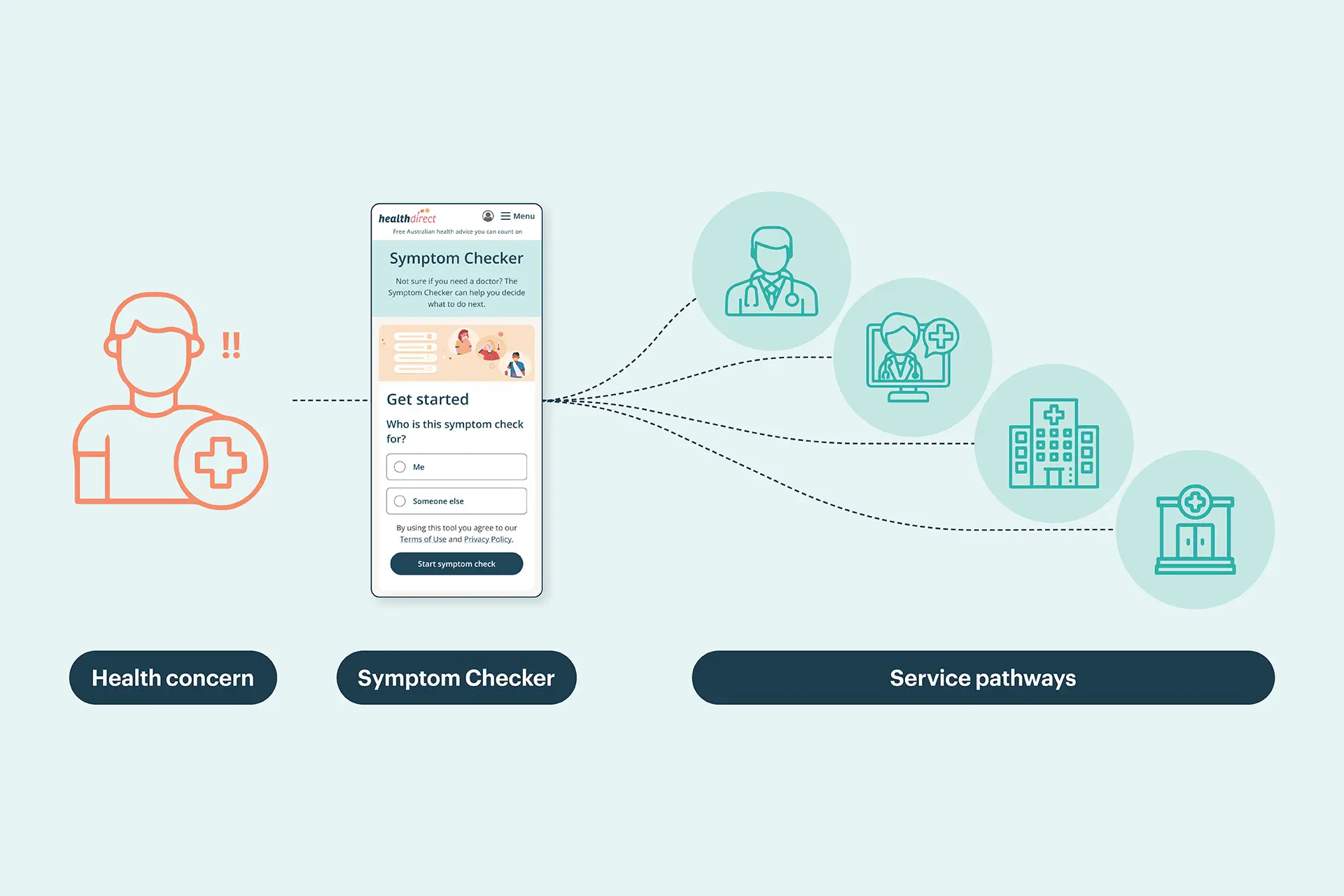
From telephone helplines to online triage tools, Healthdirect offers trusted, clinical advice that’s free and available 24/7. Its services are designed to connect people to the right care, at the right time, whether that’s self-care, a local GP, an after-hours clinic, urgent care clinic or the emergency department.
But these tools only work if people can understand and trust them.
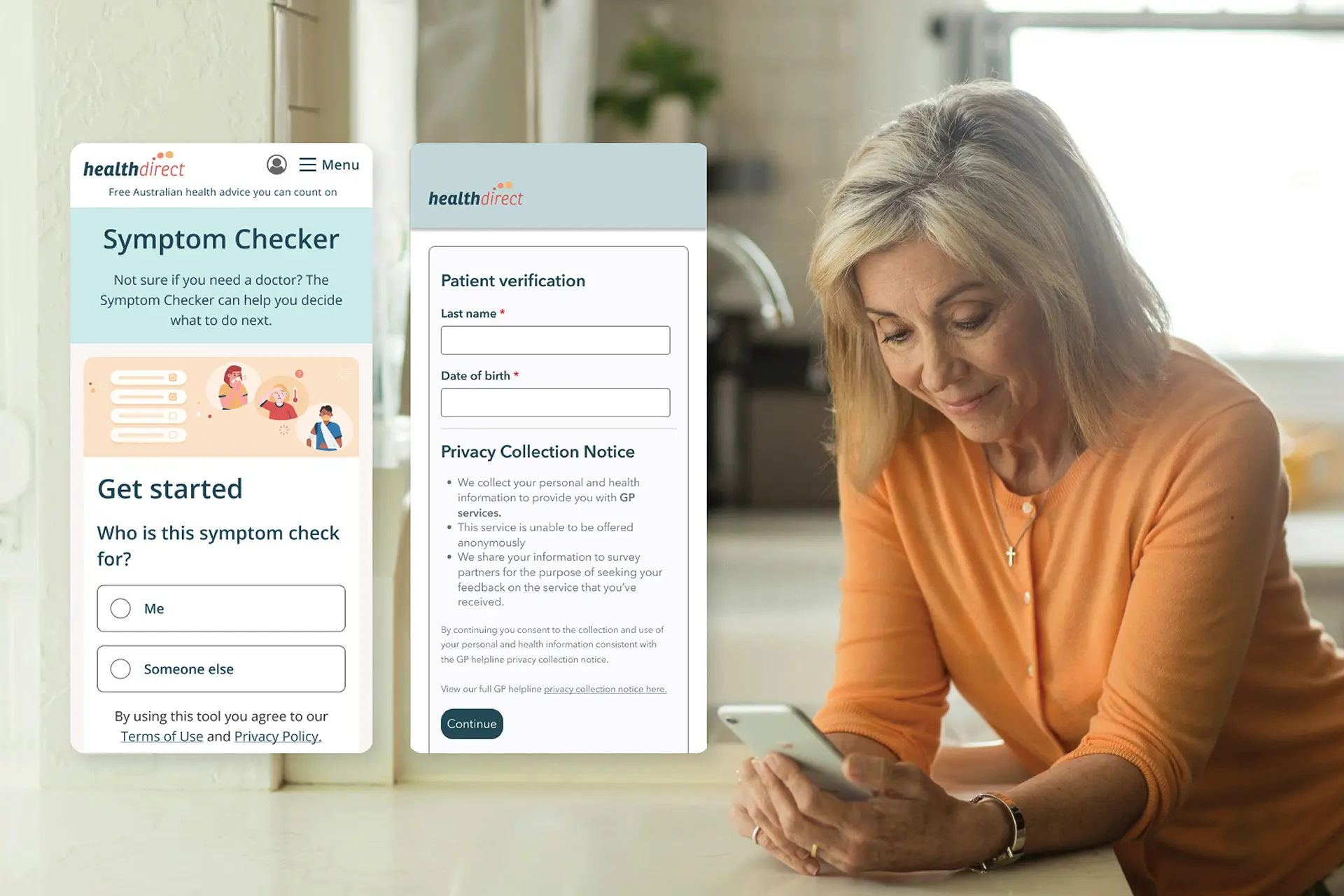
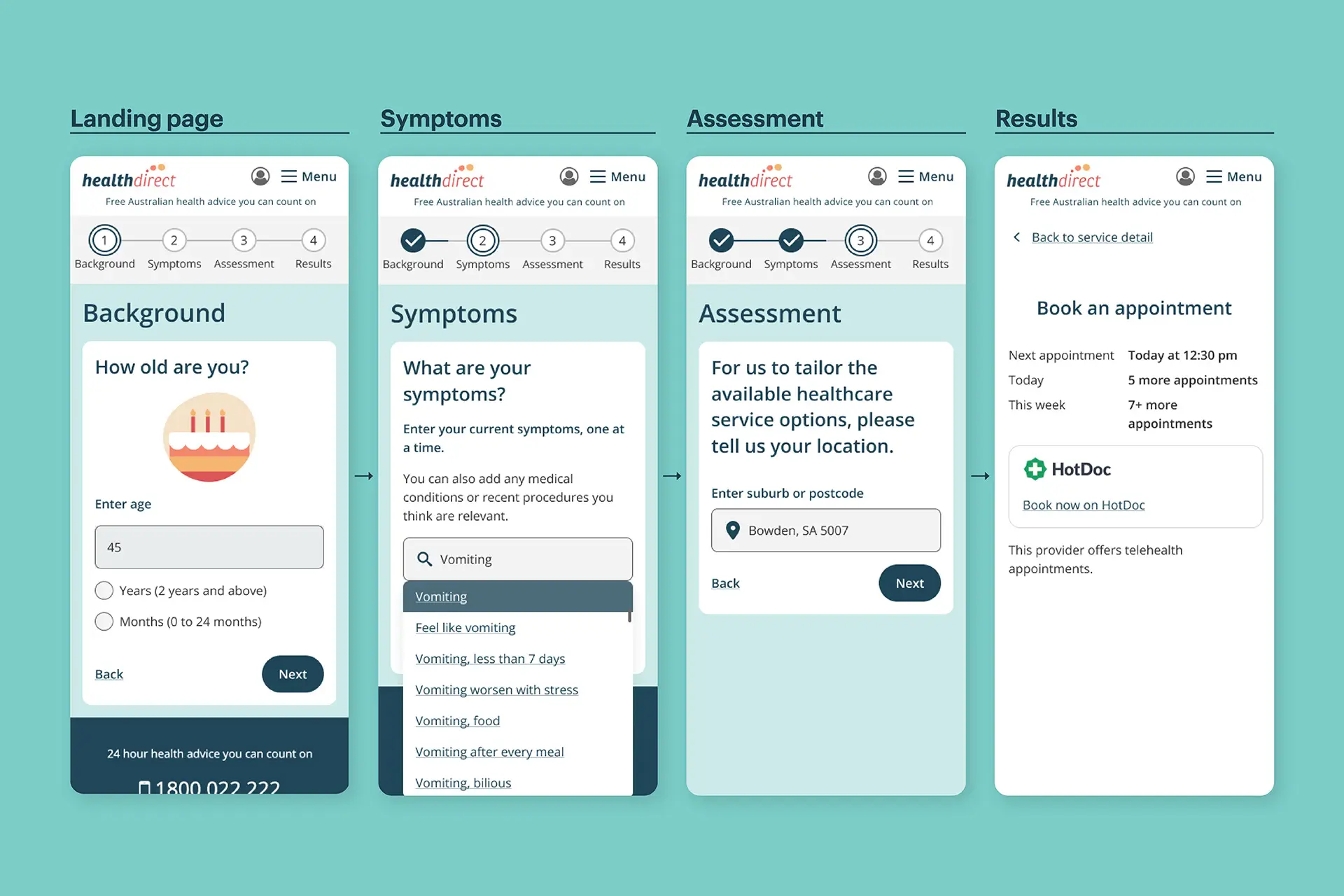
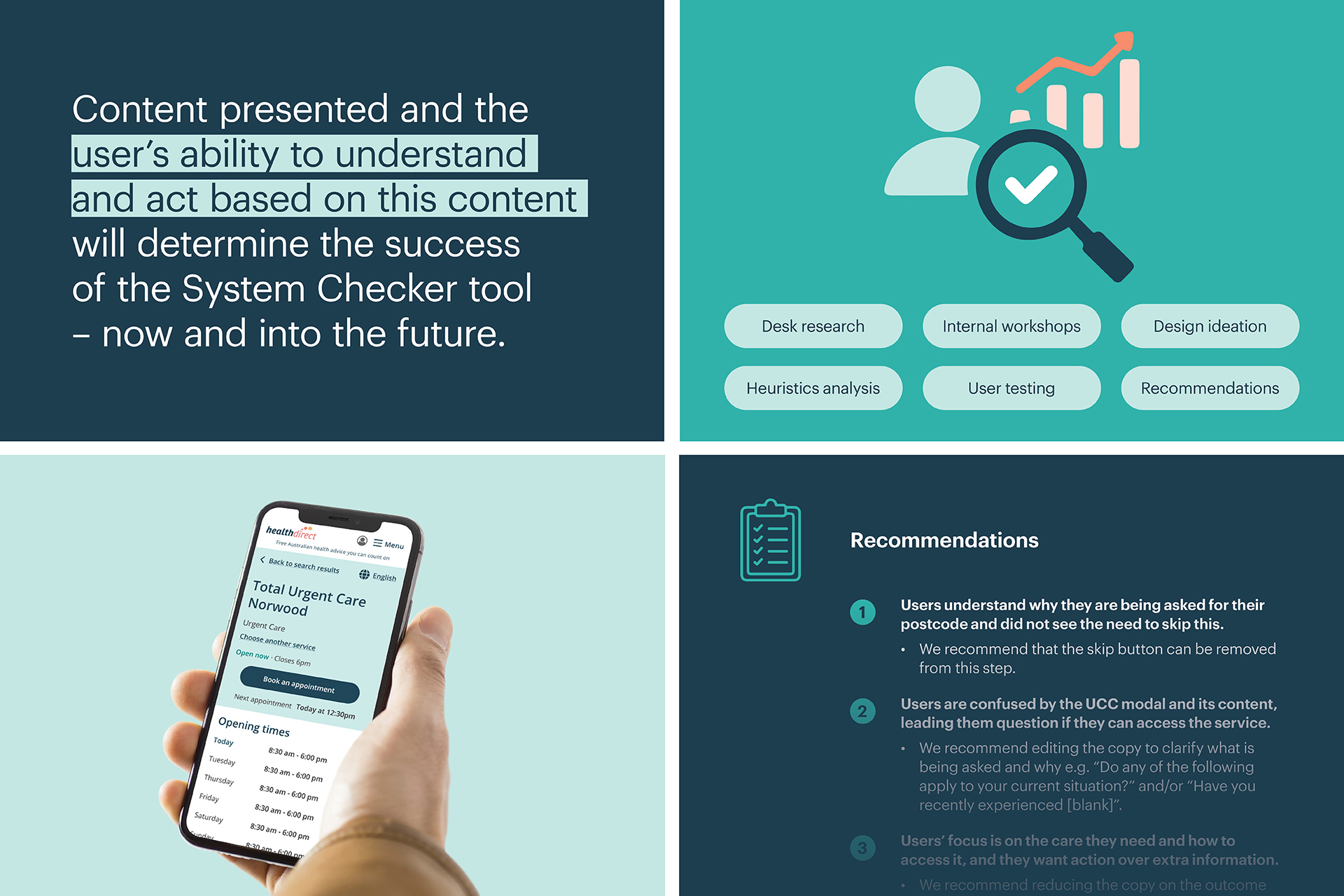
Our work focused on the Symptom Checker — Healthdirect’s interactive triage tool that guides users through a set of questions and recommends appropriate next steps based on their responses. Healthdirect engaged us to improve this experience: removing friction, strengthening trust, and making the path to care easier.
Designing for moments of uncertainty
When people are worried about their health, or the health of someone they care for, they’re not always thinking clearly. Stress, anxiety, and urgency shape the way people absorb information. That’s why even the smallest changes in language, flow or visual cues can have outsized impacts on decision-making.
As updates to the Symptom Checker began taking shape, including the addition of new service options and updated triage advice, we worked with the Healthdirect team to lead a human-centred testing process. We wanted to ensure the changes were not only clinically safe, but also usable, clear and emotionally supportive.
People told us they trusted the tool — but some of the language made their symptoms feel more serious than they were. In those instances, people were more likely to default to emergency care. Through a series of iterative refinements, we worked closely with Healthdirect to adjust the flow and fine-tune how information was presented. We focused on:
- Reassuring language and tone
- Simplified steps and recommendations
- Clearer distinctions between types of care
- Highlighting after-hours and alternative services early in the flow
These updates helped users feel more confident and calm — and crucially, more equipped to take the right next step for their needs.

System-wide impact through small design shifts
Around 30% of ED visits in Australia are potentially avoidable.¹ Improving care navigation is one of the most effective levers to reduce unnecessary demand.
While the drivers of ED pressure are complex, our work showed that targeted, evidence-based design improvements can meaningfully contribute to national health goals. And it doesn’t always take a full overhaul to make a difference. Sometimes, improving clarity and trust at a critical decision point is all it takes to change behaviour.
For Healthdirect, this work is part of a broader strategy: making it easier for Australians to access care, supporting equity and accessibility, and delivering measurable value to government shareholders.
Partnering for a healthier system
This project was more than just a digital design tweak — it was a chance to help make the health system feel more connected, more human, and easier to navigate. When you improve the first step someone takes, you can improve their whole experience. And in doing so, you also ease the load on the broader system.
It’s part of Healthdirect’s wider strategy to make care more accessible, more integrated, and more responsive — through smarter tools, clearer pathways and evidence-based improvements. Their work is helping more Australians understand, trust and act on the advice they receive.
We’re proud to play a role in that journey — helping design not just better tools, but a better experience of care for everyone.
¹ Australian Institute of Health and Welfare. Potentially preventable hospitalisations in Australia, 2020–21.