Over the last few years, I’ve spent a lot of time with people whose trust has been shaken in all kinds of ways. Through our work at Folk, we’ve met people who’ve lost their life savings to scams, people who’ve been deceived in online relationships, and people who’ve simply had one too many frustrating experiences with an online form that is their first step in seeking help. Different stories, different scales, but the same underlying experience that the digital world isn’t as safe or as dependable as it once felt.
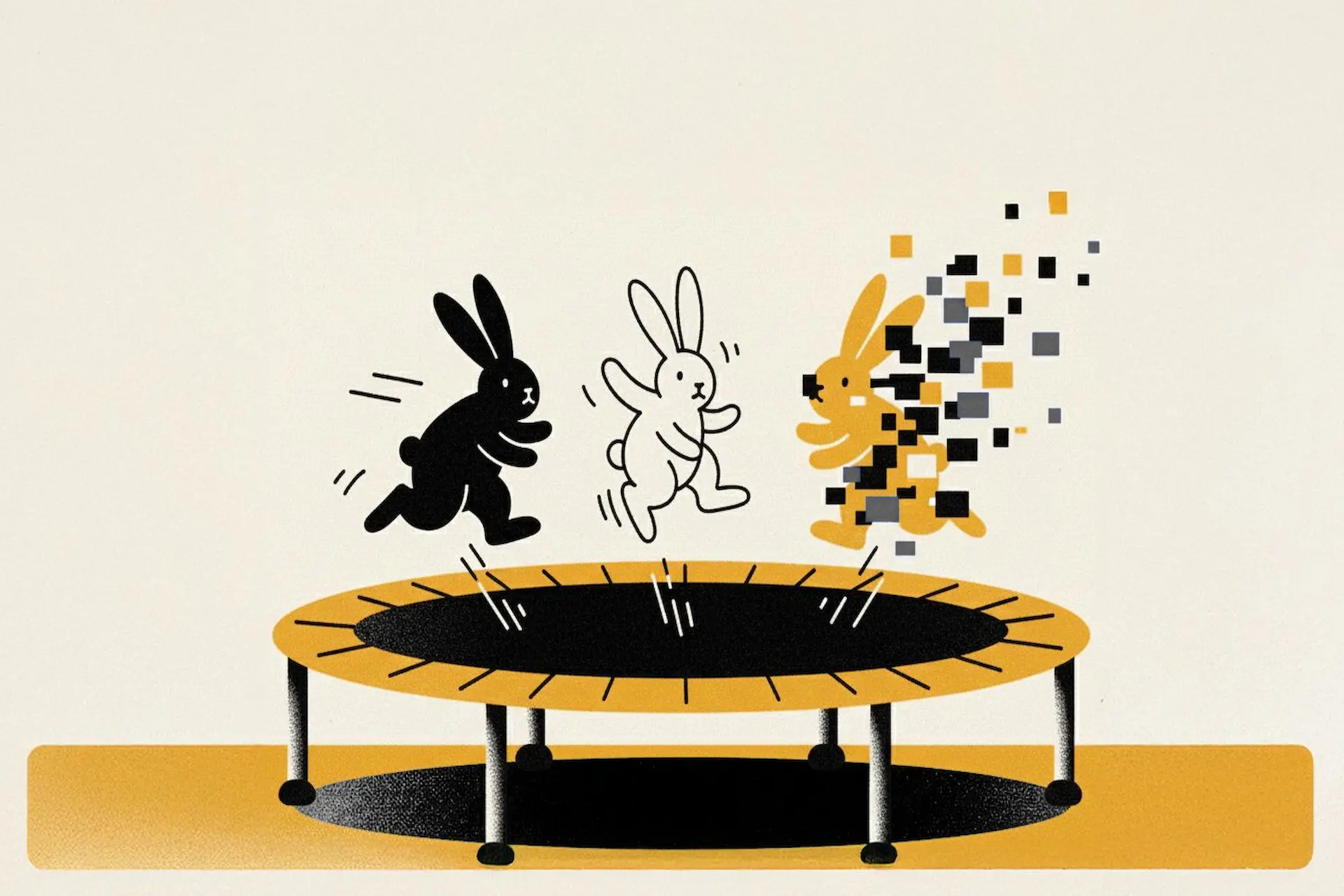
And it isn’t just the people we interview. I see it close to home. When my mum sent me a video of rabbits bouncing on a trampoline and asked whether it was real, we laughed about it being AI-generated. But underneath the joke was something more serious. If we can’t tell what’s real anymore, how do we trust anything?
Trust doesn’t usually break all at once. It erodes, click by click, moment by moment. A confusing process here. An unexpected request there. A message that doesn’t feel quite right.
And when someone finally decides to take action like to report a scam, to ask for help, they rarely arrive in a calm and rational state. They’re often upset, angry, ashamed, exhausted, blaming themselves or simply worn out. And almost all of them approach the reporting experience with a deep sense of suspicion and distrust.
That’s why working in these spaces has changed how I think about design. Good design isn’t just about clarity or usability. Sometimes it’s about repairing broken trust.
Where systems come apart
People don't think in terms of agencies, departments, platforms or service boundaries. They don’t care who owns which step. To them, it’s all one thing: the system. And that system is either helping them or it isn’t.
But behind the scenes, what looks like one system is usually many - each with it’s own rules, constraints, handoffs and teams. A team might believe the problem is a broken field or a confusing step, but that is usually only a symptom.
I’ve learned in this work that before we zoom in on a single moment, we need to zoom out. Stepping back usually reveals the real causes of why something feels broken. It might be an old rule that hasn’t been revisited, a technical limitation that shapes the entire experience, or a decision made in a silo without anyone seeing how it affects everything around it.
Once we understand that bigger picture, we can zoom in again and see how those issues surface in the smallest details. For someone who’s already vulnerable, these gaps don’t show up as architecture or process. They show up as tiny moments that just feel off, like:
- being asked a question they’ve already answered
- a screen that behaves differently from the one before it
- a word or step that suddenly feels out of place or asks for something unexpected
For someone who’s on edge, these small moments carry a lot of weight. They’re the points where the system meets the person, and if they don’t feel steady or familiar, trust slips. And it’s not just trust in that screen or that field, but trust in the whole organisation behind it.
Rebuilding trust isn’t about fixing one point of friction. It’s about creating an experience that feels calm, coherent and reliable from start to finish. When the system aligns around the person, they can feel it. And while nothing’s ever perfect, it can still offer care at scale. Design becomes the quiet signal that the system sees them, understands what they’ve been through and is here to support them.
Design is a responsibility
Everything people experience on a screen is shaped by what sits behind it. A label, a message, a button, the way a step behaves, none of it is accidental. It’s the visible end of hundreds of decisions, constraints and priorities that come together out of sight. When those things aren’t aligned around the people who need support, the fractures show. And when they are aligned, even the simplest interface can feel steady and human.
That’s why I keep coming back to the simplest questions.
Who are we designing this for?
What have they been through before they reach this moment?
How might a single decision, even a tiny one, change how safe or understood they feel?
These questions sound basic, but they’re the ones that matter most.
And the only real way to answer them is to go and talk to people. You can’t understand this by looking at numbers on a dashboard or guessing from inside a meeting room. You can’t understand it through ChatGPT or an AI model. You learn it by listening to the people who’ve lived through the moments you’re designing for. By understanding what helped, what hurt, and what they needed in those moments.
Trust isn’t something that gets added at the end. It’s created through the consistency of the choices we make, both in the experience people touch and in all the unseen layers behind it. It grows in the relationship we build with the people who rely on what we make.
So the question isn’t whether people trust us.
It’s whether we’re designing in a way that earns that trust over time.