Adaptation is one of those words we hear often but rarely unpack. At its core, it’s the work of adjusting our systems, places, policies and ways of living so they can withstand and ideally thrive within a rapidly changing climate. It’s not mitigation (reducing emissions), though the two are connected. Adaptation is the other half of the climate equation: preparing for the changes already here, and those still coming.
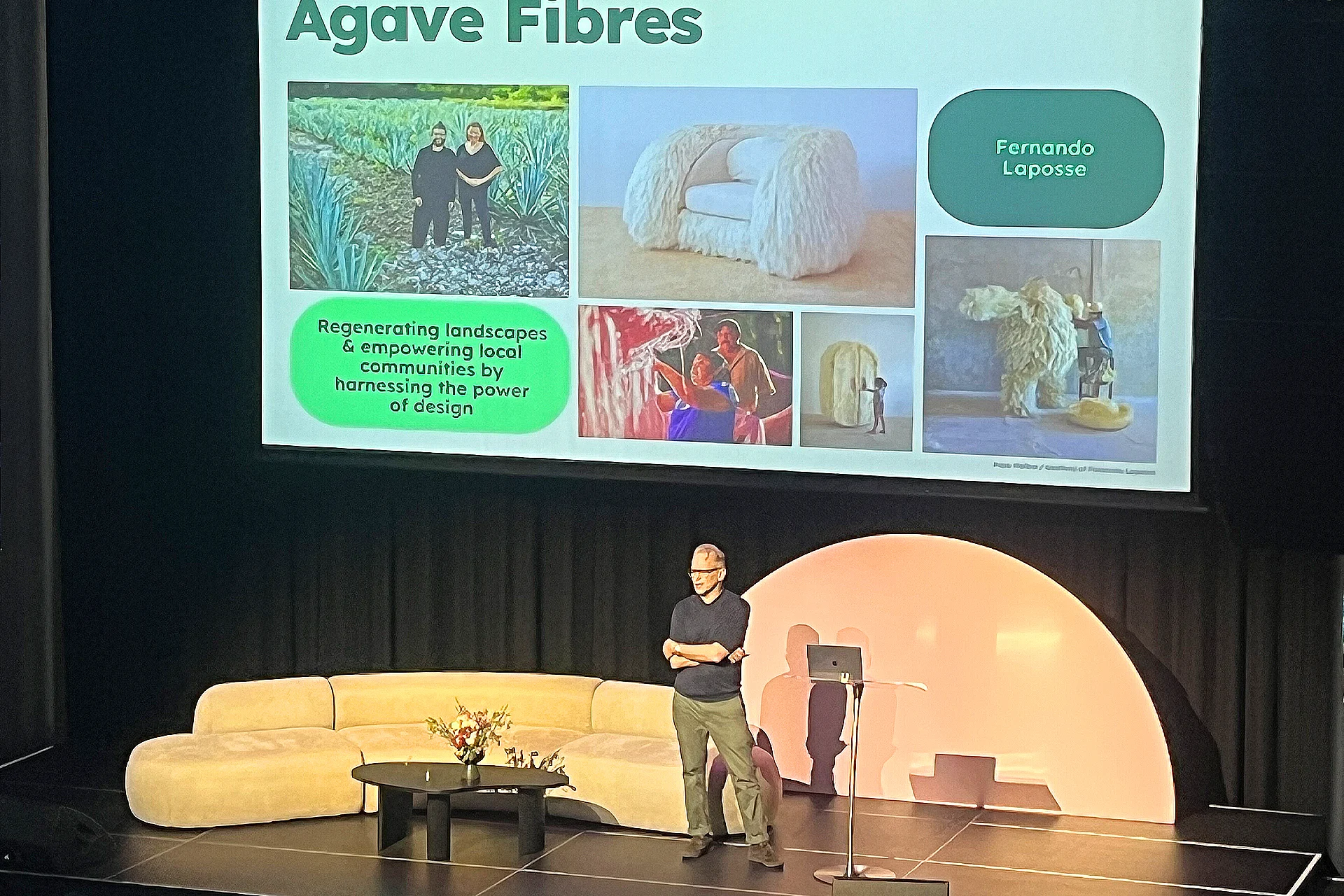
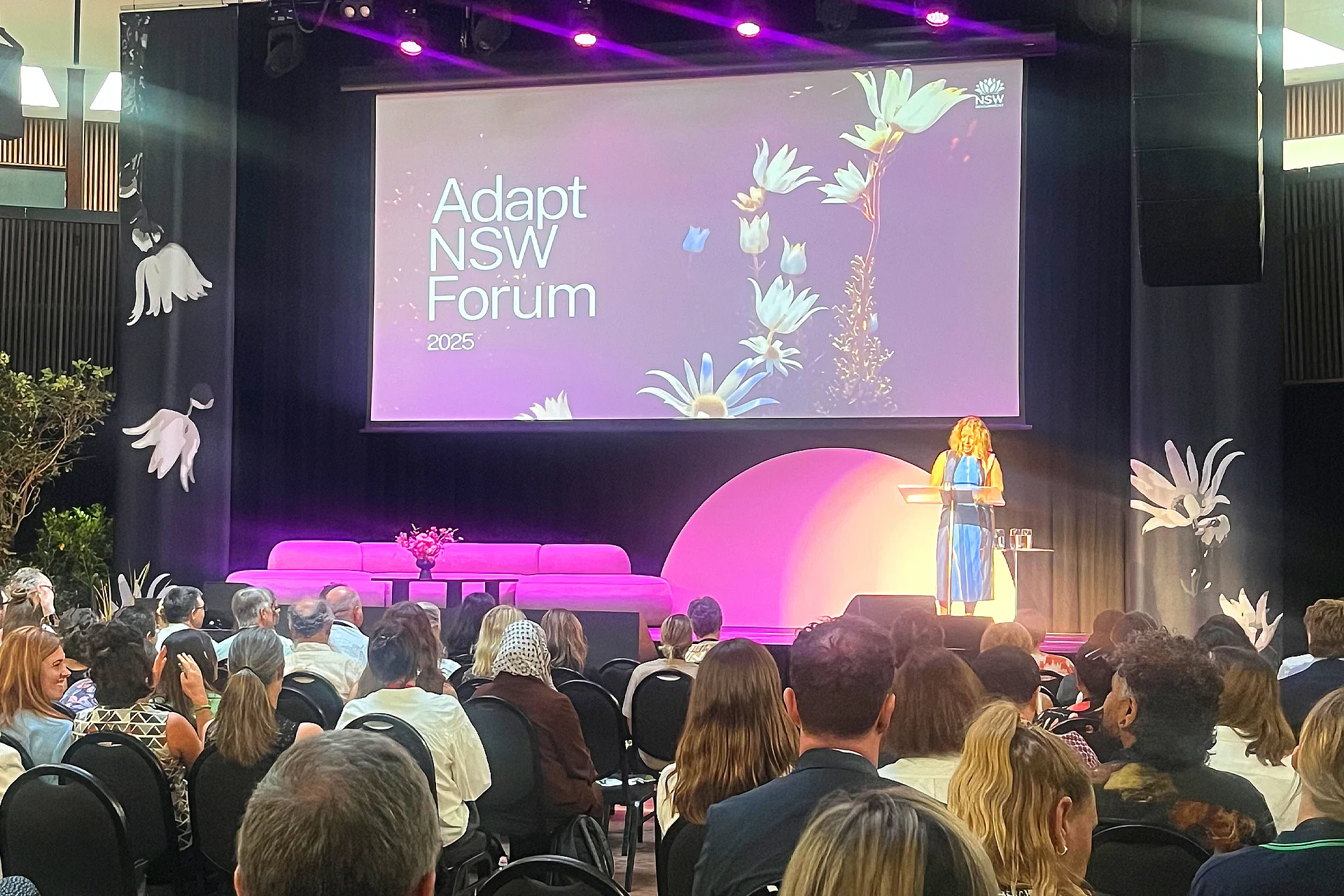
The AdaptNSW Forum — hosted by the Department of Climate Change, Energy, the Environment and Water (DCCEEW), who we’re proud to call a client — brings together people across government, science, industry, community and design to explore how this work is progressing in practice. And this year it was clearer than ever that adaptation is no longer just about updating risk registers or protecting assets. It’s about rethinking relationships, reimagining systems, and rediscovering old knowledge in new contexts. It’s also about noticing the positive work already underway — in labs, in communities, in policy circles, in paddocks.
This year’s theme, Other Ways, captured that shift. Across the sessions I made it to – and the ones I absorbed indirectly through hallway debriefs – 4 ideas kept resurfacing.
Other ways of knowing
Throughout the Forum, “knowing” showed up as something bigger than datasets and dashboards. Several sessions explored how knowledge is shared, cared for and held collectively, whether through science, culture, lived experience or deep relationship with place.
The breakout sessions reinforced the power of knowledge systems working together – Indigenous fire management practices honed over thousands of years now being actively listened to and integrated with Western approaches; cultural burning being revived with communities; Traditional Ecological Knowledge reshaping how cities are imagined and made.
In the closing keynote, Andy Marks invited us to zoom out even further, framing humans as co-inhabitants in a planetary partnership that’s been running for billions of years. It was an elegant reminder that adaptation isn’t just about better information. It’s about understanding our place in a larger, interconnected system, and noticing the relationships that sustains it.
Together, these threads suggest a shift from “knowledge as information” to “knowledge as relationship”. Less extractive, more connective.
Other ways of thinking
If the Forum had a collective brain, it was running in prototype mode.
Government speakers talked about adaptive planning that refuses to be frozen in time. New datasets like the NSW Coastal Erosion and Inundation Assessment are being built to evolve, not gather dust. Sessions on urban design, nature repair and regional transformation all pointed to thinking that’s less “protect what is” and more “shape what could be”.
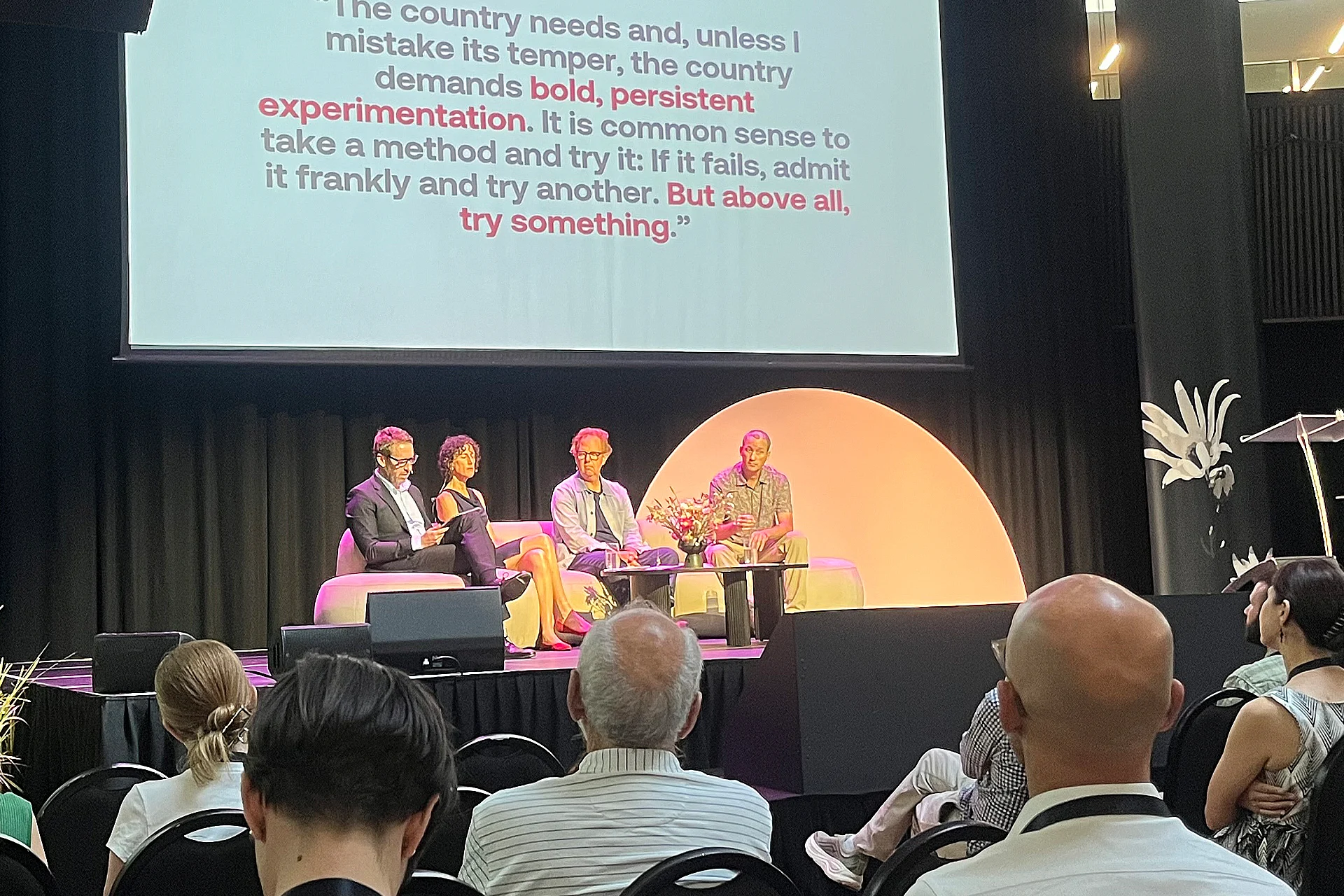
And then there was the panel on risk-taking, where the biggest takeaway was that not taking risks is, ironically, the riskiest move of all. This all hints at something important: adaptation thinking is getting comfortable with uncertainty. Not as an obstacle, but as a design material.
Other ways of feeling
Climate work is data-heavy, but the human emotions underneath it were impossible to miss.
Youth speakers shared reflections that blended honesty, frustration, grief and momentum, often holding multiple truths at once. For them, climate futures aren’t abstract; they’re lived. Their contributions were grounded, clear-eyed and, at times, disarmingly hopeful.
Other community-focused sessions echoed this emotional landscape. Farmers experimenting with agtech. Regions exploring long-term resilience instead of short-term recovery. Local groups building their own early warning systems.
Across agriculture, regional resilience and community preparedness, the theme was similar: people are already adapting - not just intellectually, but emotionally. The takeaway? Feeling is part of the work. You can’t spreadsheet your way around people’s emotions, but you can design with them.
Other ways of doing
The “doing” was everywhere, and this is where the Forum felt most energising.
Across the program (including several sessions I couldn’t attend but followed closely), people were:
- redesigning urban environments to be low-carbon, inclusive and climate-ready
- bringing finance into the picture through resilience bonds, climate-aligned budgeting and nature-positive investment
- trialling agtech and data tools to support on-farm adaptation
- supporting regional businesses to shift from reactive survival to more deliberate, system-aware transformation
- building community-led solutions, often faster than the systems around them.
The pattern was clear: adaptation is becoming distributed, practical and diverse, shaped by people and organisations willing to test, iterate and act. Adaptation didn’t feel like a distant ambition. It felt very… now.
What stays with me
Walking away, the biggest surprise wasn’t the scale of the challenge (we know that part). It was the amount of momentum already building – quietly and steadily, in all sorts of directions.
Other Ways didn’t ask us to abandon what works. It asked us to widen the frame. To see the experiments already underway. To recognise that adaptation is not a single plan, but a pattern: distributed, collaborative, and occasionally a bit unconventional.
And maybe that’s the most hopeful thing.
The future isn’t waiting.
But neither are we.